



Can You Retrofit Solar or a Heat Pump to Your Existing Geyser?
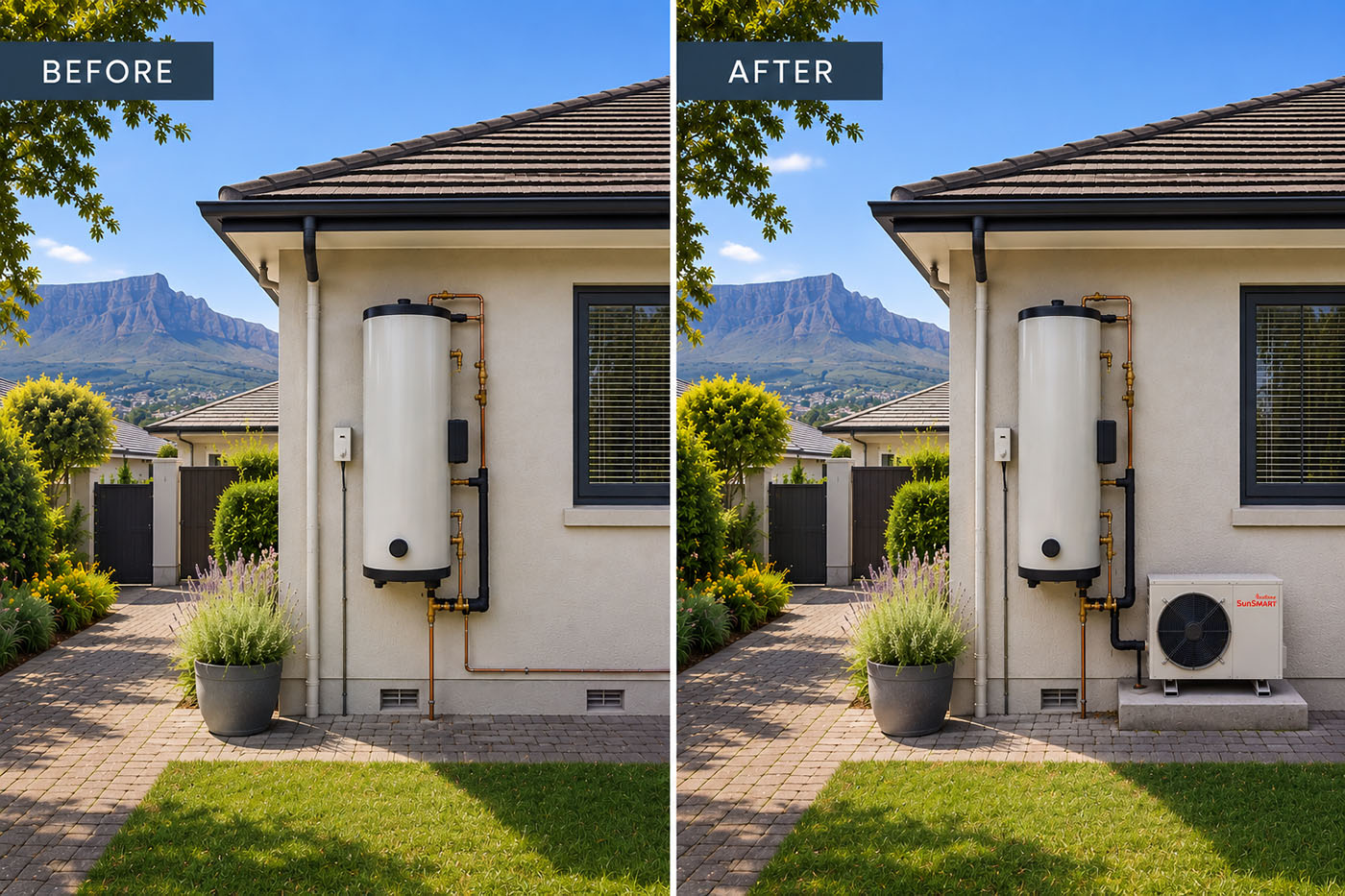
If you’ve already have a geyser at home and are thinking about solar, you might be wondering whether you have to replace the geyser as well.
In many cases, you don’t.
This is actually one of the first things worth checking before spending money on a completely new hot-water system. If the geyser is still in good condition, it may be possible to keep it and add a heat pump, solar thermal collector, or a combination of the two.
That can be a much more practical way of improving the system.
Adding a heat pump to an existing geyser
A heat pump can be used with an existing geyser in suitable installations. The geyser continues to hold the hot water, while the heat pump does the job of heating it.
The difference is in the way the water gets heated.
A heat pump works differently. It takes warmth from the air around the unit and uses it to heat the water. The electricity is mainly needed to run the heat pump and move that heat where it is needed.
The result is that you don’t need as much electricity to get the water up to temperature. That’s the main reason people look at heat pumps when they want to cut down on the cost of running their geyser.
And if your existing geyser is still in good shape, there’s no reason to throw it away just because you want to change the way you heat the water. In the right setup, the heat pump can work with the geyser you already have.
The existing tank may still have plenty of life left in it.
What happens if you already have solar?
Solar PV is slightly different because the panels produce electricity rather than hot water.
That electricity can be used anywhere in the house. You can run appliances with it, charge batteries and, of course, use it to run your hot-water system.
This is one reason solar PV and a heat pump make such a good combination.
During the day, your panels are producing electricity. If the water in the geyser needs heating, the heat pump can use some of that power. Once the water has reached the required temperature, the heat pump stops.
The solar panels don’t stop, though.
Whatever electricity is still being produced can go towards the rest of the house.
Can you have solar and a heat pump on the same geyser?
In a suitable installation, yes.
This is probably one of the better ways to get more out of an existing geyser.
The solar PV system supplies electricity, the heat pump uses that electricity efficiently to heat the water, and the existing geyser provides the storage.
There is no need for the heat pump to be running simply because the sun is shining. It runs when the water needs heating.
That point is worth considering when you’re looking at the size of a solar installation. If you use a conventional geyser element, a lot of electricity will be needed to heat the water. With a heat pump, much less electrical energy is required for the same job.
The difference can help you get more from the solar panels you already have.
Is every geyser suitable for a retrofit?
Not automatically.
The condition of the geyser is important. If the tank is old, leaking or already showing signs of trouble, putting additional equipment onto it may not be the best use of your money.
The size of the geyser needs to be considered too. A small household with relatively low hot-water use has different requirements from a large family.
Then there is the installation itself. The position of the geyser, available space for the heat pump, pipework and electrical supply all need to be checked.
It’s much better to look at these things before buying equipment than to discover afterwards that something needs to be changed.
Retrofitting can save you from replacing a perfectly good geyser
The idea behind a retrofit is fairly simple. If something you already own is still useful, why replace it unnecessarily?
A good existing geyser can potentially become the storage part of a more efficient hot-water system.
You can add a heat pump to reduce the electricity needed for heating, and solar PV can provide the electricity for the heat pump while also supplying the rest of the home.
For some households, installing both at the same time could make sense. For others, starting with a heat pump and adding solar later may be the better route.
There isn’t one answer for every house.
At SunScan, we can recommend an installer who can assess your existing geyser and look at what can realistically be added to it. The condition of the geyser, your hot-water requirements and the available space all form part of that decision.
So before you remove a geyser that is still working properly, have a look at the retrofit options first.
You may already have the most expensive part of the system sitting in your home. It might just need the right technology added to it.


